
The $10 Billion Warning Signal Silicon Valley Chose to Ignore

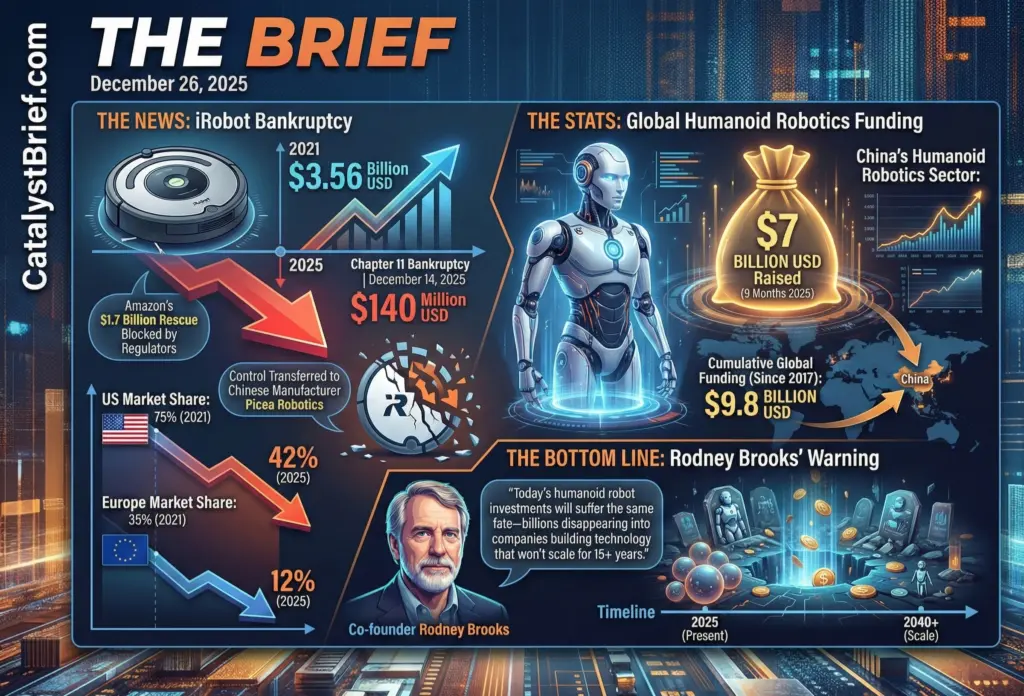
The robotics pioneer who built Roomba just watched his company collapse into bankruptcy. Three months earlier, Rodney Brooks warned billions in humanoid robot funding would vanish the same way. iRobot’s failure isn’t just another tech story—it’s a $10B warning. If Brooks couldn’t save the robotics company he built with 50M units sold, what makes today’s founders think more capital will solve harder problems? China ships humanoids at $5,900 while Figure burns through $1.75B at a $39B valuation.
The $16,000 Humanoid That’s Rewriting Manufacturing Economics

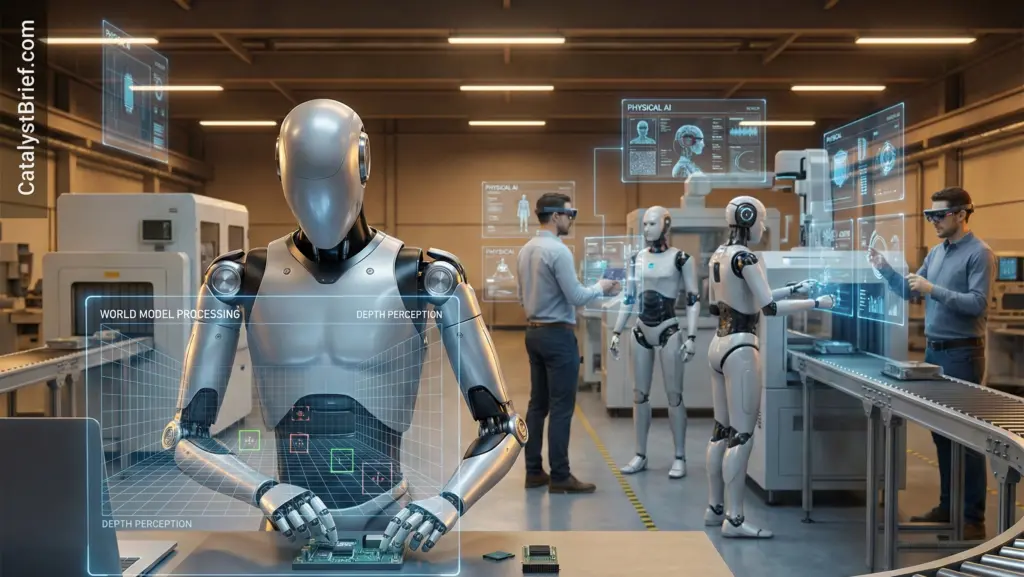
In Shenzhen, a humanoid robot threads a needle with sub-millimeter precision for just $16,000 USD—less than annual worker cost. At CES 2026 this January, Intel’s 2nm chips deliver 180 TOPS of AI, enabling millisecond decisions. World models give machines deep physical space understanding. Korean companies captured 60% of Innovation Awards. The convergence of affordable humanoids, production-ready AI, and edge processing enables entirely new manufacturing strategies impossible with human labor.

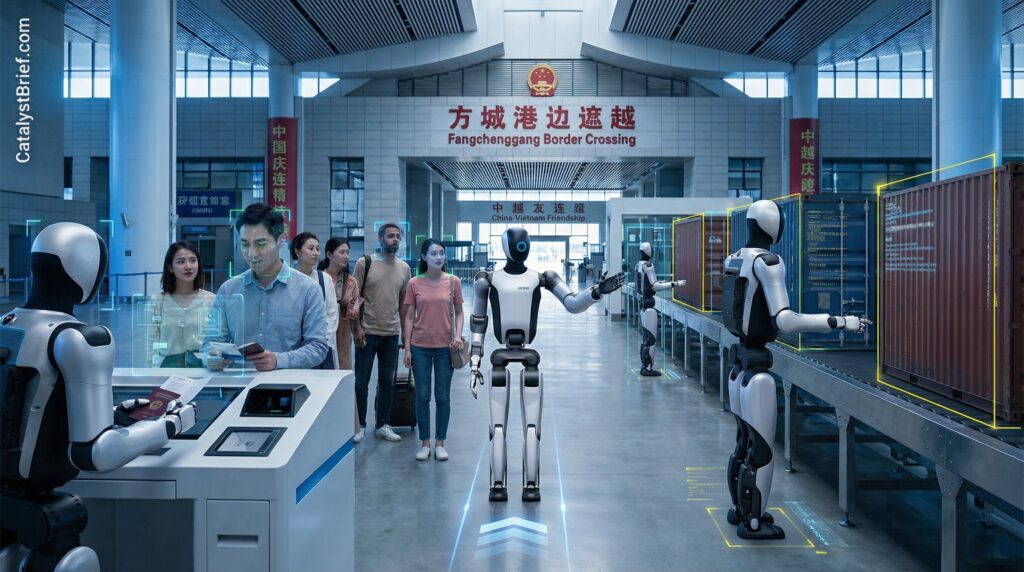
Multiple UBTECH Walker S2 humanoid robots (1.76 meters tall, white and black design with jointed limbs) working at a modern border checkpoint.

China’s $37 Million Contract for Embodied AI Border Security

China deployed humanoid robots at its Vietnam border crossing under a $37M contract—marking embodied AI’s first major move from factories into public infrastructure. The Walker S2 robots handle passenger guidance, cargo inspection, and 24/7 monitoring while autonomously swapping batteries in 3 minutes. This isn’t a tech demo. It’s operational reality testing whether AI in physical bodies can reliably augment human decision-making in high-stakes government operations where failure isn’t optional.